Blog
What natural hydrogen actually is?
Natural hydrogen accumulation in subsurface ophiolitic settings is emerging as a low-carbon energy source which is governed by coupled mineral redox processes. However, the exploration of such resources requires understanding and accurate prediction of depth-temperature window in which hydrogen-producing serpentinization overtakes hydrogen consuming hematite reduction. The understanding of mechanistic origin of temperature-dependent hydrogen release remains limited.
Research
Geological Hydrogen Prospectivity in India
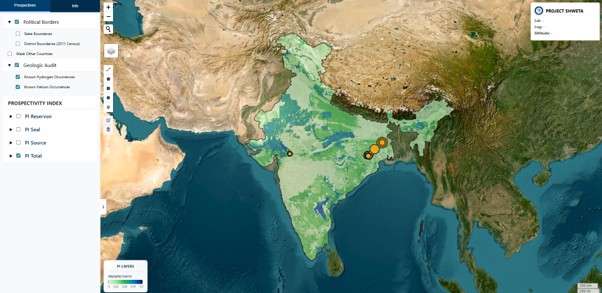
This paper develops a semiquantitative GIS-based framework to identify promising geological hydrogen exploration targets associated with iron ore deposits in India. The method assumes that hydrogen generation is favored where iron-rich rocks interact with water, while faults provide migration pathways and suitable geological settings may support accumulation. Iron ore locations across Andhra Pradesh, Jharkhand, Karnataka, Odisha, and Tamil Nadu were evaluated using Euclidean distances to positive Bouguer gravity anomalies, faults, and surface water bodies. Each parameter was scored from 0.1 to 1.0 and combined through a weighted favorability index, assigning weights of 0.6 to Bouguer anomalies and 0.2 each to faults and water bodies. Magnetic anomalies, mafic or ultramafic lithologies, and aquifer conditions were then used as qualitative checks. Karnataka emerged as the most prospective state, with the highest average favorability index of about 0.92, and several sites approaching or reaching 1.0. Odisha and Jharkhand also contained strong targets, while selected locations in Tamil Nadu showed local promise; Andhra Pradesh ranked lowest overall. The study provides a first-pass national screening tool rather than proof of hydrogen resources, emphasizing that soil-gas surveys, geochemical analyses, improved geophysical data, reservoir characterization, and exploratory drilling are required to robustly validate the identified prospects.
Field
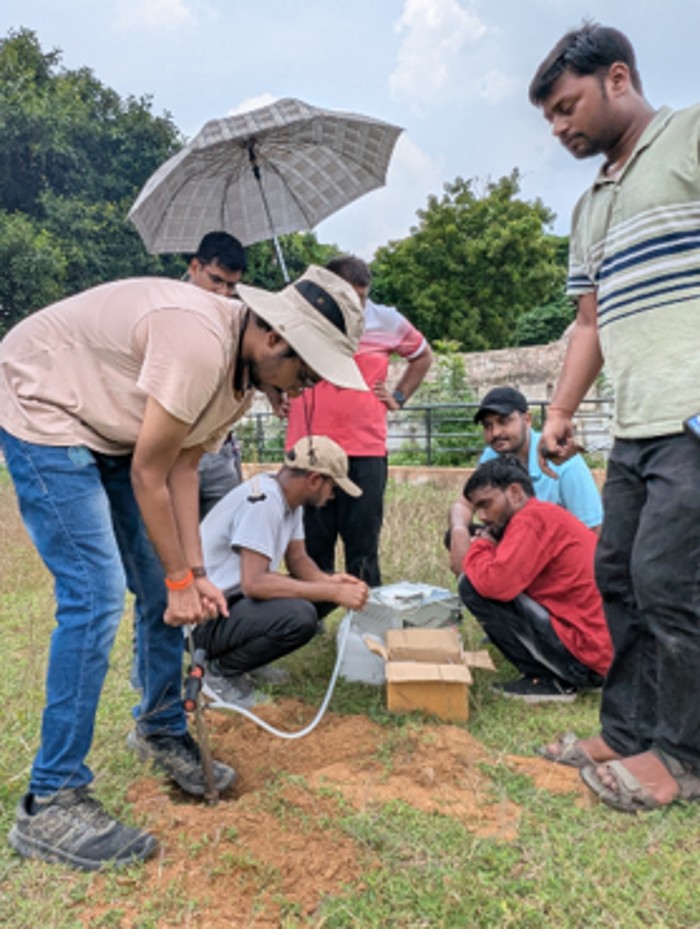
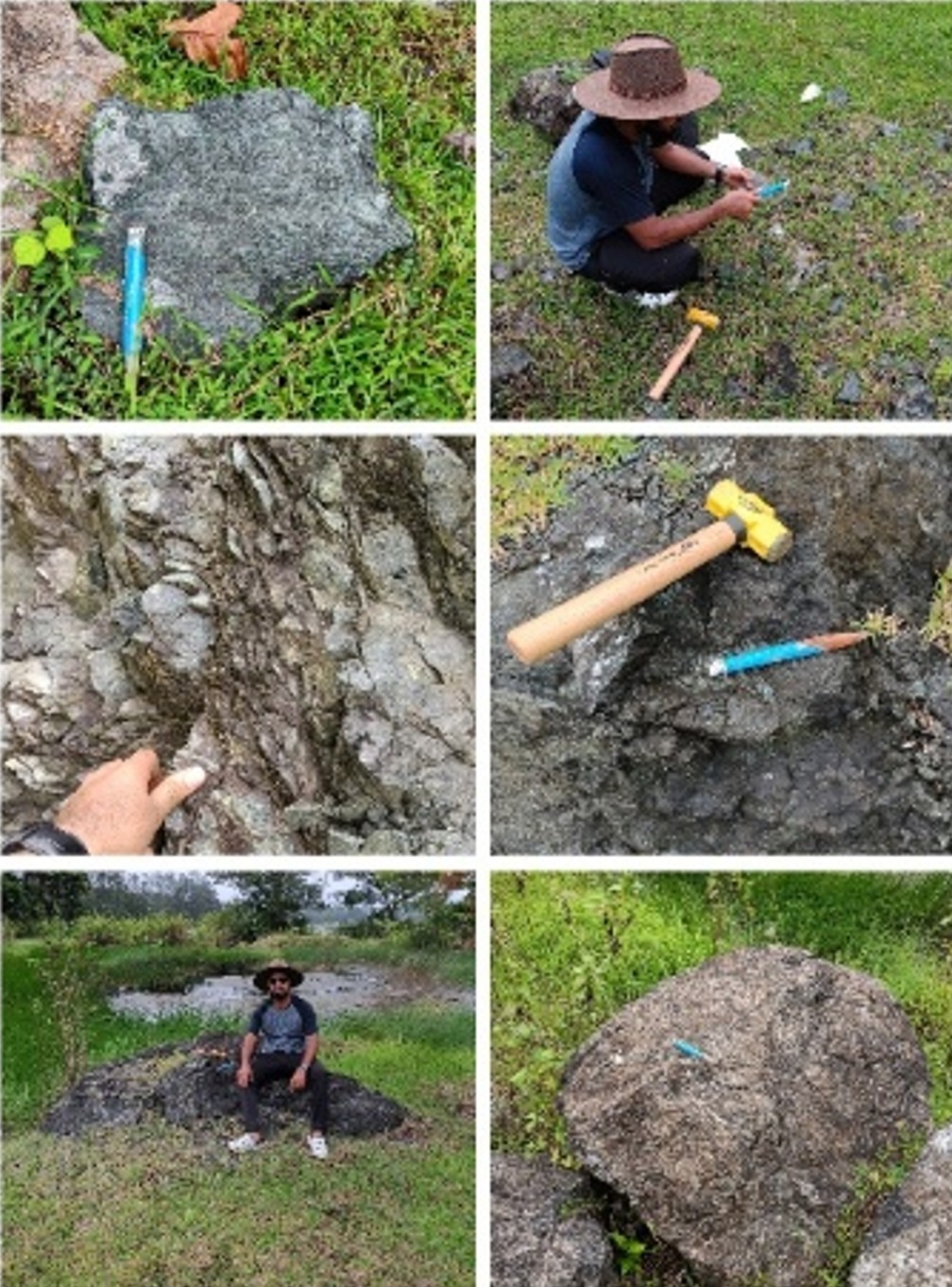
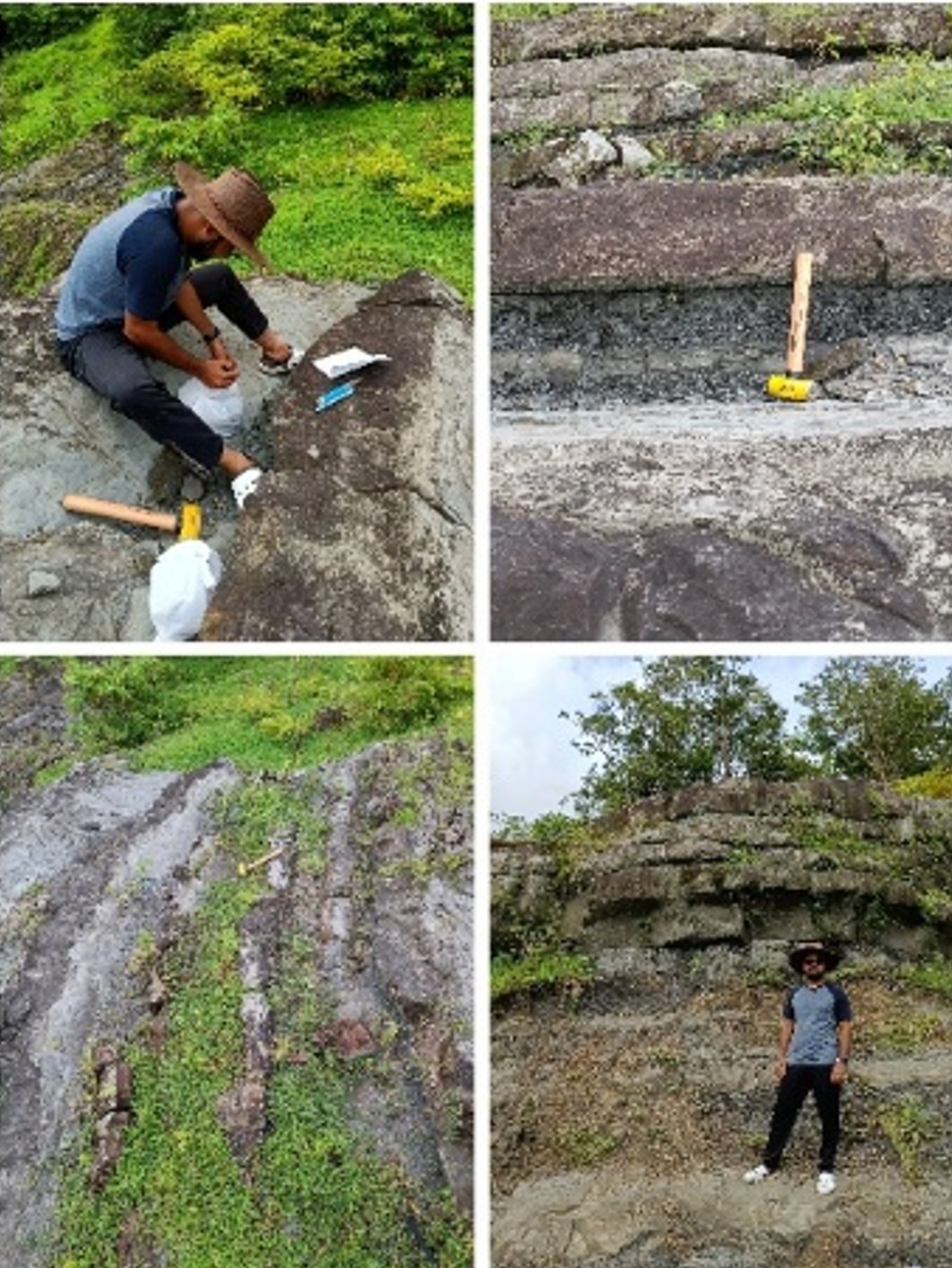
From a map to a sampling plan
How a prioritised shortlist becomes a real soil-gas campaign on the ground.
 Platform
 Team
Team Lab
Lab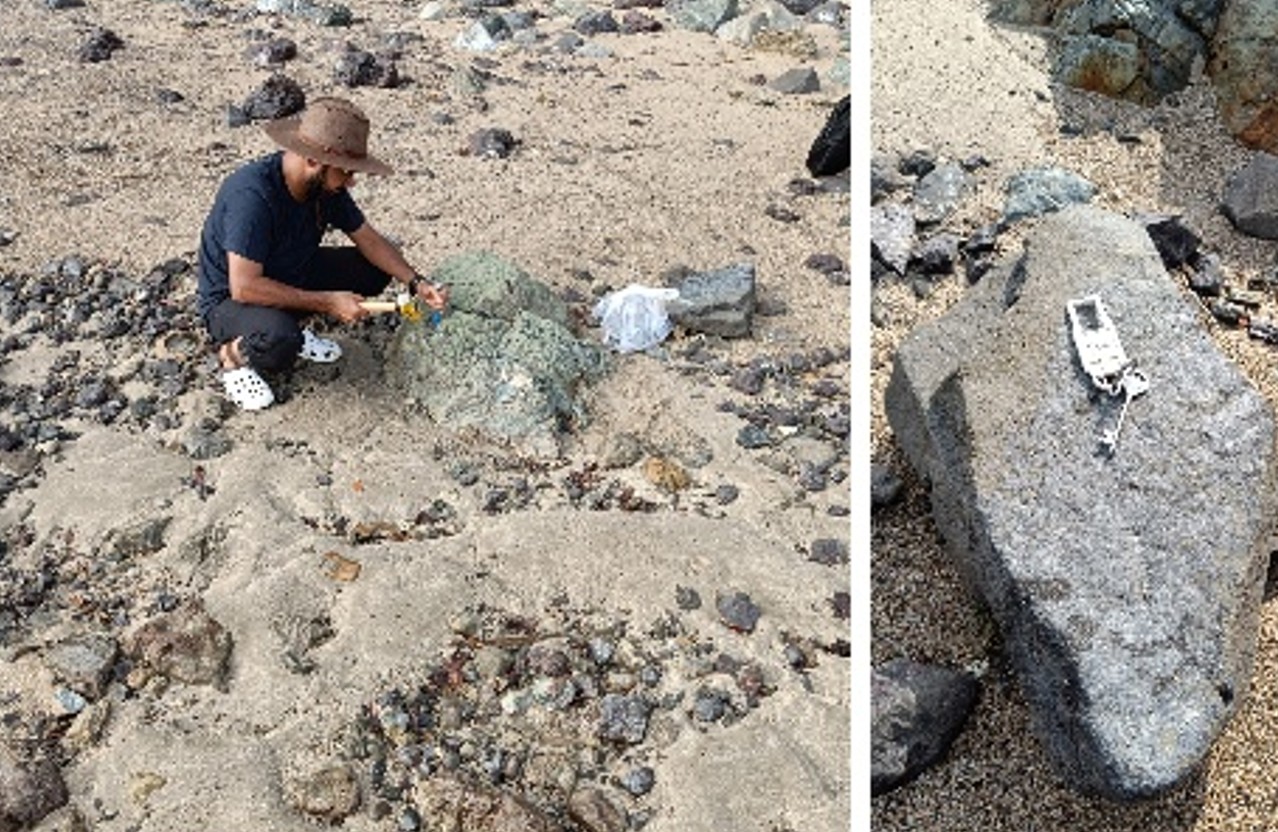 Outcrop
 Workshop
 Review